
Canada
UpdatedAir Canada Express LaGuardia Crash: FAA Staffing Changes Raise New Questions as Fatal Collision Investigation Continues
Two air traffic controllers face possible disciplinary action as U.S. aviation authorities address staffing shortages and runway safety concerns — seven months after the fatal LaGuardia collision that killed two Canadian pilots.
By CanJam News
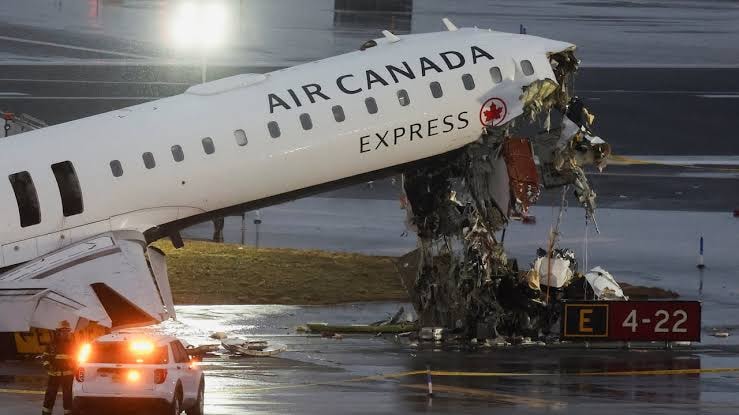
Two air traffic controllers face possible disciplinary action as U.S. aviation authorities address staffing shortages and runway safety concerns.
NEW YORK — Nearly seven months after a fatal collision involving an Air Canada Express aircraft and an airport firefighting vehicle at New York's LaGuardia Airport, investigators have yet to announce a final determination of what caused the tragedy.
While the National Transportation Safety Board (NTSB) continues its investigation, reports concerning the actions of two air traffic controllers have raised questions about staffing, workplace accountability and whether additional safety measures are necessary to prevent similar accidents.
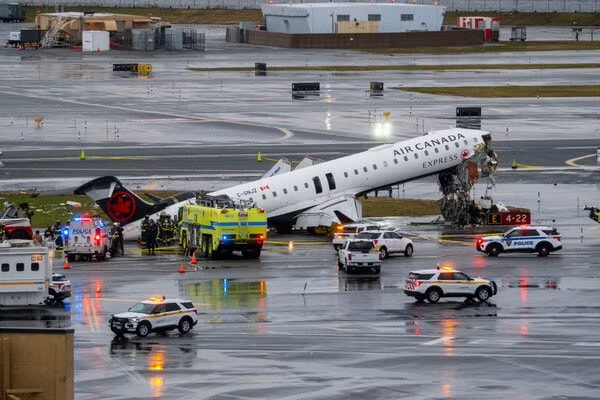
Two Controllers Face Possible Dismissal
According to reports published in late August, the Federal Aviation Administration (FAA) began pursuing disciplinary action against two LaGuardia air traffic controllers who allegedly left their shifts approximately one hour early on March 22, the night of the fatal collision.
Their departure reportedly left two controllers managing tower operations during a particularly demanding period involving weather-related delays and a separate aircraft emergency.
The FAA's disciplinary process could result in termination, although CanJam News has not independently confirmed whether either employee has been dismissed.
Importantly, the reported early departures have not been established by the NTSB as the cause of the collision.
Two Pilots Lost Their Lives
The March 22 collision involved an Air Canada Express CRJ-900 aircraft operated by Jazz Aviation, arriving from Montréal.
The aircraft collided with an airport firefighting vehicle while landing at LaGuardia.
Captain Antoine Forest and First Officer Mackenzie Gunther lost their lives.
Passengers, flight attendants and emergency personnel were also affected, with numerous injuries reported.
The tragedy has brought renewed attention to how aircraft, emergency vehicles and air traffic controllers communicate during runway operations.
FAA Announces Major Hiring Increase
In a separate development, the FAA announced on October 1 that it had hired 2,235 air traffic controller trainees during fiscal year 2026, exceeding its target of 2,200.
The agency has identified controller recruitment, training and workforce retention as important priorities.
Although this announcement is not directly connected to the LaGuardia investigation, it highlights ongoing efforts to address staffing challenges across the American aviation system.
However, hiring additional trainees does not immediately resolve staffing shortages. New controllers must complete extensive training before becoming fully qualified.
Aviation Safety Technology Under Scrutiny
On October 13, concerns about aviation technology also emerged after reports that more than two dozen American lawmakers requested a pause in the deployment of an artificial intelligence-assisted flight management tool in the Washington, D.C., area.
Lawmakers reportedly raised questions about safety testing, training and transparency.
The technology is unrelated to the LaGuardia collision, but the development adds to the wider discussion about aviation oversight and the importance of evaluating new systems before introducing them into safety-critical environments.
Important Questions Remain Unanswered
As the LaGuardia investigation continues, several questions deserve attention:
1. Did staffing levels or controller workload contribute to the circumstances surrounding the collision? 2. What disciplinary action, if any, has been finalized against the two controllers who reportedly left early? 3. Were existing runway safety procedures sufficient to prevent the firefighting vehicle from entering the aircraft's path? 4. Could additional technology or improved communication procedures have prevented the collision? 5. What recommendations will the NTSB make when its investigation is completed?
These are questions for investigators and aviation authorities. They should not be interpreted as conclusions about responsibility.
What About Canadian Aviation Safety?
For Canadians, the investigation carries particular significance because the aircraft was operating under the Air Canada Express brand.
Canadian passengers depend on international aviation safety standards when travelling between Canada and the United States.
The findings could provide important lessons for airports on both sides of the border, including Toronto Pearson, Montréal–Trudeau and other major Canadian airports.
Whether those lessons involve staffing, emergency vehicle movements, controller workload or runway technology will depend on the evidence established by investigators.
CanJam News Perspective: Safety Must Come Before Convenience
The aviation industry depends on several groups working together, including pilots, air traffic controllers, ground personnel, emergency responders and airport management.
When a serious accident occurs, examining the actions of individual employees is important, but so is investigating the systems, policies and working conditions surrounding them.
Accountability should be based on evidence, not speculation.
The deaths of two pilots deserve a thorough investigation that identifies what happened, why it happened and what changes may be necessary to prevent another tragedy.
The NTSB has not released its final probable-cause determination, and the outcome of the reported FAA disciplinary proceedings remains unconfirmed.
CanJam News will continue following official developments.
Do you believe airports in Canada and the United States are doing enough to address staffing shortages and runway safety? Share your thoughts in the comments.
Source & attribution
Reporting by CanJam News. Information in this article is based on publicly available statements and verified reporting available at publication.
Topics

