
canada
Bishnoi Gang's Growing Footprint in Canada Raises Concerns Over Extortion, Violence and Organized Crime
Canadian authorities are confronting the growing presence of the Bishnoi Gang, a transnational organized-crime network linked to extortion, shootings and violence targeting South Asian diaspora communities across Canada.
By Dwight Simpson
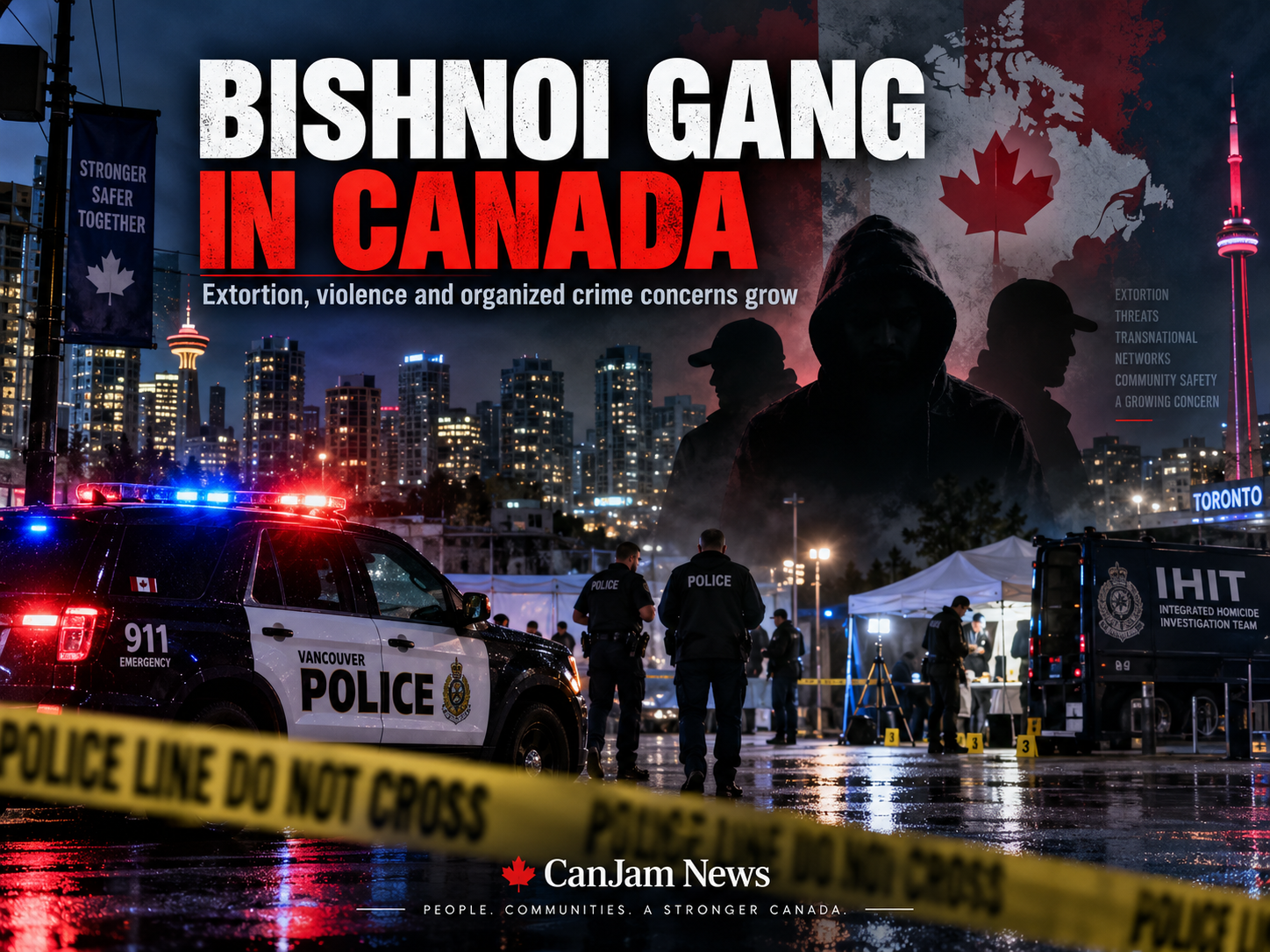
Canadian authorities are continuing to confront the growing presence of the Bishnoi Gang, a transnational organized-crime network that originated in India but has increasingly become a Canadian public-safety concern.
The group is named after Lawrence Bishnoi, an Indian gangster who remains imprisoned in India. The Bishnoi Gang has been linked by authorities to extortion, shootings and other violent criminal activity targeting members of the South Asian diaspora in Canada and the United States.
Canada formally added the Bishnoi Gang to its list of terrorist entities on September 29, 2025. The designation gives Canadian authorities broader powers to freeze or seize assets connected to the organization and investigate offences involving financing, recruitment and support for the group.
Why Canada is concerned
The issue has become particularly significant in British Columbia, Alberta, Manitoba and Ontario, where authorities have been dealing with a broader surge in extortion, shootings, arson and intimidation targeting members of South Asian communities.
Canadian financial intelligence officials have warned that extortion-related violence has affected South Asian diaspora communities across the country and has involved organized-crime networks with links to India.
A Canada Border Services Agency intelligence report described the Bishnoi network as having a growing operational presence in Canada and alleged that some people associated with the organization entered the country through immigration programs.
Those allegations relate to specific individuals and should not be interpreted as suggesting international students or immigrants generally are connected to organized crime.
Major international crackdown
Canadian and American law-enforcement agencies launched a major coordinated operation against the Bishnoi organization this summer.
In July 2026, the RCMP announced that it had worked with the FBI on an international investigation targeting Lawrence Bishnoi and other organized-crime figures.
Authorities said the networks were involved in activities including extortion, drug trafficking, kidnapping and violent crime in Canada and the United States.
The operation resulted in arrests, charges and searches in several countries. Three people from British Columbia were arrested on provisional warrants for possible extradition to the United States, while police carried out searches in parts of Metro Vancouver.
The RCMP later said the wider international operation resulted in dozens of people being charged.
U.S. prosecutors have also charged Lawrence Bishnoi and alleged associate Goldy Brar, who has been identified by authorities as a senior figure in the network.
Canada steps up removals
Canada has also been using immigration enforcement as part of its response to extortion-related organized crime.
By early September, Canadian border authorities said 188 removal orders had been issued and 111 people had been removed from Canada in extortion-related enforcement cases.
Those removals included people in British Columbia, the Prairie provinces and the Greater Toronto Area.
However, authorities did not say that every person removed was a member of the Bishnoi Gang. The numbers represent the broader Canadian crackdown on extortion-related organized crime.
Connections to violence in Canada
Canadian authorities have linked the Bishnoi network to extortion and shootings targeting members of the South Asian diaspora, particularly in Metro Vancouver and Brampton, Ontario.
The network has also been connected to several high-profile investigations involving violence in Canada and abroad.
Some of the allegations involving individual suspects remain before the courts and have not been proven.
Canadian authorities have previously alleged that criminal groups, including the Bishnoi network, were used by agents connected to the Indian government to target certain individuals in Canada.
India has rejected Canadian allegations and has separately said it previously asked Canada to extradite people it identified as being connected to the gang.
What the terrorist designation means
Canada's decision to designate the organization as a terrorist entity represents a significant escalation in how authorities can respond to the network.
The designation allows authorities to target financial assets and investigate individuals who knowingly provide support to the organization where the legal requirements are met.
For Canadians, particularly those in communities affected by extortion threats, the Bishnoi issue is no longer simply an overseas organized-crime story.
It has become a Canadian law-enforcement, immigration, financial-crime and public-safety issue — one that authorities say crosses provincial and international borders.
Source & attribution
Reporting by CanJam News. Information in this article is based on publicly available statements and verified reporting available at publication.
Topics

