
Jamaica
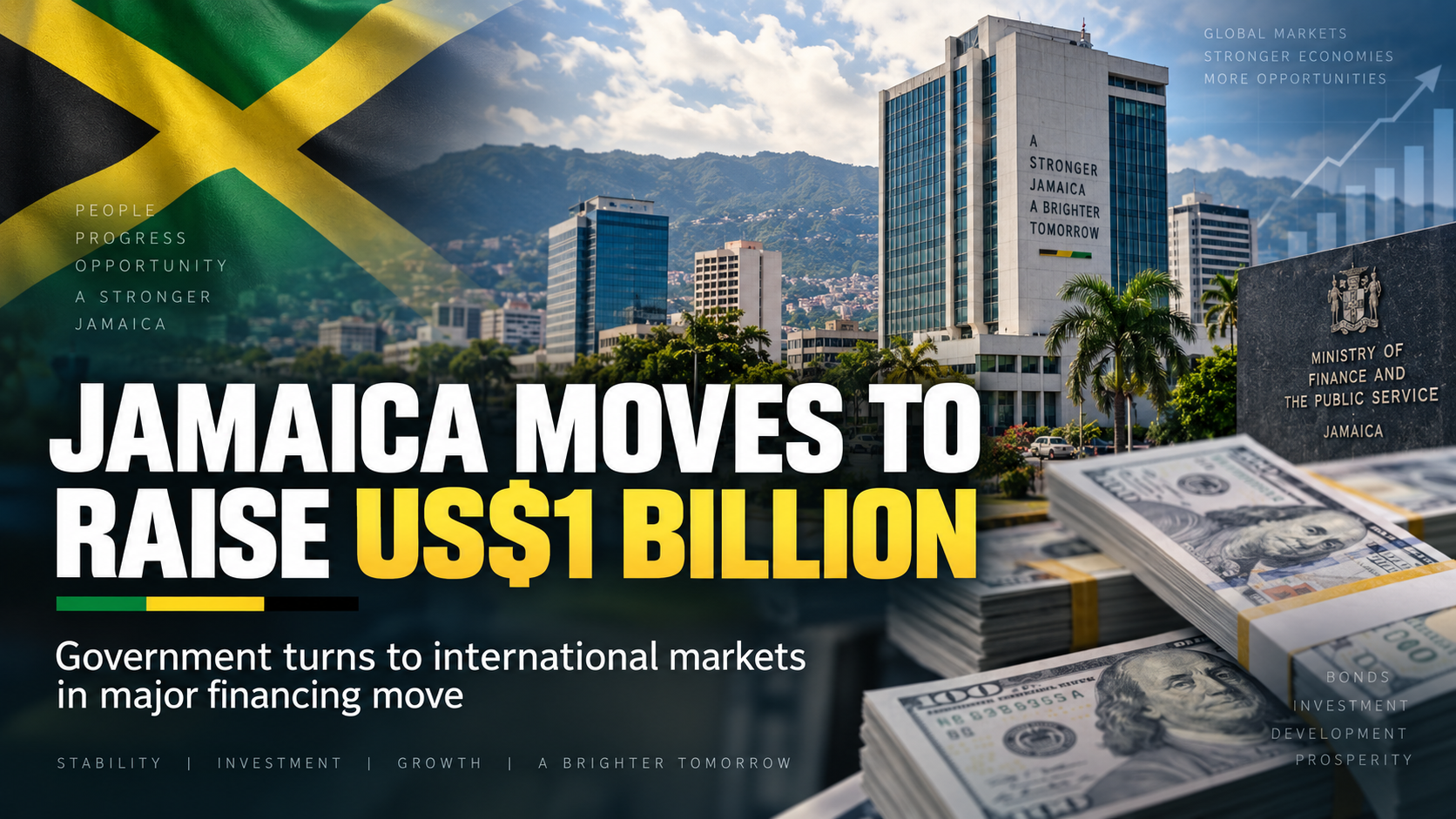
Jamaica Moves to Raise US$1 Billion on International Market
The Government of Jamaica has moved to raise US$1 billion on the international capital market in a major financing transaction aimed at managing the country's debt and supporting budgetary needs.
By Dwight Simpson
KINGSTON, JAMAICA — September 4, 2026
The Government of Jamaica has moved to raise US$1 billion on the international capital market, in a major financing transaction aimed at managing the country's debt and supporting budgetary needs.
The proposed unsecured bond is part of Jamaica's broader liability management strategy, with the government seeking to refinance portions of existing debt while also raising funds for general budget purposes.
According to reporting by the Jamaica Observer, approximately US$600 million of the new financing is expected to be used for a tender and exchange offer involving existing government bonds, while the remaining amount would support general budgetary objectives. The new bond is expected to mature in 2037.
Government Looking to Restructure Existing Debt
At the same time as launching the new bond, the Government of Jamaica has opened a tender and exchange offer for holders of three existing global bonds.
The move is intended to help Jamaica manage upcoming debt repayments and reduce pressure from bonds that mature sooner. In practical terms, the government is trying to replace some older debt with longer-term financing.
Jamaica currently has approximately US$837.53 million outstanding on notes due in April 2028, carrying an interest rate of 6.75 per cent. There are also outstanding bonds due in 2036 and 2039.
The tender offer opened on September 2 and is scheduled to close on September 9, unless the government extends or ends the offer earlier. Settlement is expected by September 17.
International Investors Being Targeted
Investor meetings began this week as Jamaica markets the new bond to international investors.
Citigroup Global Markets Inc. and Scotia Capital (USA) Inc. are acting as deal managers and joint lead underwriters for the transaction. The bond is expected to be listed on the Euro MTF Market of the Luxembourg Stock Exchange.
The transaction marks another major return by Jamaica to international debt markets.
In 2023, the government carried out a similar liability-management exercise, repurchasing existing debt while issuing a Jamaican-dollar-linked international bond.
Why Jamaica Is Borrowing
The government's stated objective is not simply to borrow an additional US$1 billion and spend it all immediately.
A significant portion is being used to restructure existing debt, which can help spread repayments over a longer period and reduce the amount that becomes due in the near term.
However, part of the money is also expected to support the government's broader budget.
The move comes at a time when Jamaica's government finances have faced some pressure.
For the first four months of the 2026–27 fiscal year, government revenue and grants were reported at approximately J$353.84 billion, around eight per cent below budget projections. Government expenditure during the same period was also below budget, at approximately J$387.27 billion.
The government recorded a fiscal deficit of about J$33.43 billion, slightly wider than originally budgeted for that period.
What It Could Mean for Jamaicans
Large government borrowing transactions can sound alarming, but the impact depends heavily on how the money is used, the interest rate obtained, and whether the new debt improves Jamaica's overall repayment schedule.
If the transaction allows Jamaica to refinance more expensive or near-term debt on favourable terms, it could reduce refinancing pressure.
On the other hand, borrowing still creates obligations that must eventually be repaid, including interest.
That means the final pricing of the bond, investor demand and the amount of older debt successfully exchanged will be important in determining whether the transaction strengthens Jamaica's financial position.
A Major Test of Investor Confidence
Jamaica's ability to raise US$1 billion internationally will also be watched as a measure of investor confidence in the country's economy and debt-management strategy.
International investors typically examine a country's economic growth, fiscal performance, debt levels, inflation, foreign-exchange position and political stability before deciding what interest rate they require.
The final terms of Jamaica's new bond will therefore provide an indication of how global investors currently view the country's financial risk.
The transaction remains in progress, and additional details are expected once the bond is priced and the tender process is completed.
CanJam News will continue to follow the US$1-billion financing transaction and provide updates as additional details become available.
Source & attribution
Reporting by CanJam News. Information in this article is based on publicly available statements and verified reporting available at publication.
Topics

