
Jamaica
Jamaica Takes Historic Reparations Petition to King Charles III
Jamaica has formally submitted a petition to King Charles III seeking legal guidance on Britain's responsibility for centuries of African enslavement and whether reparations may be legally owed.
By Dwight Simpson
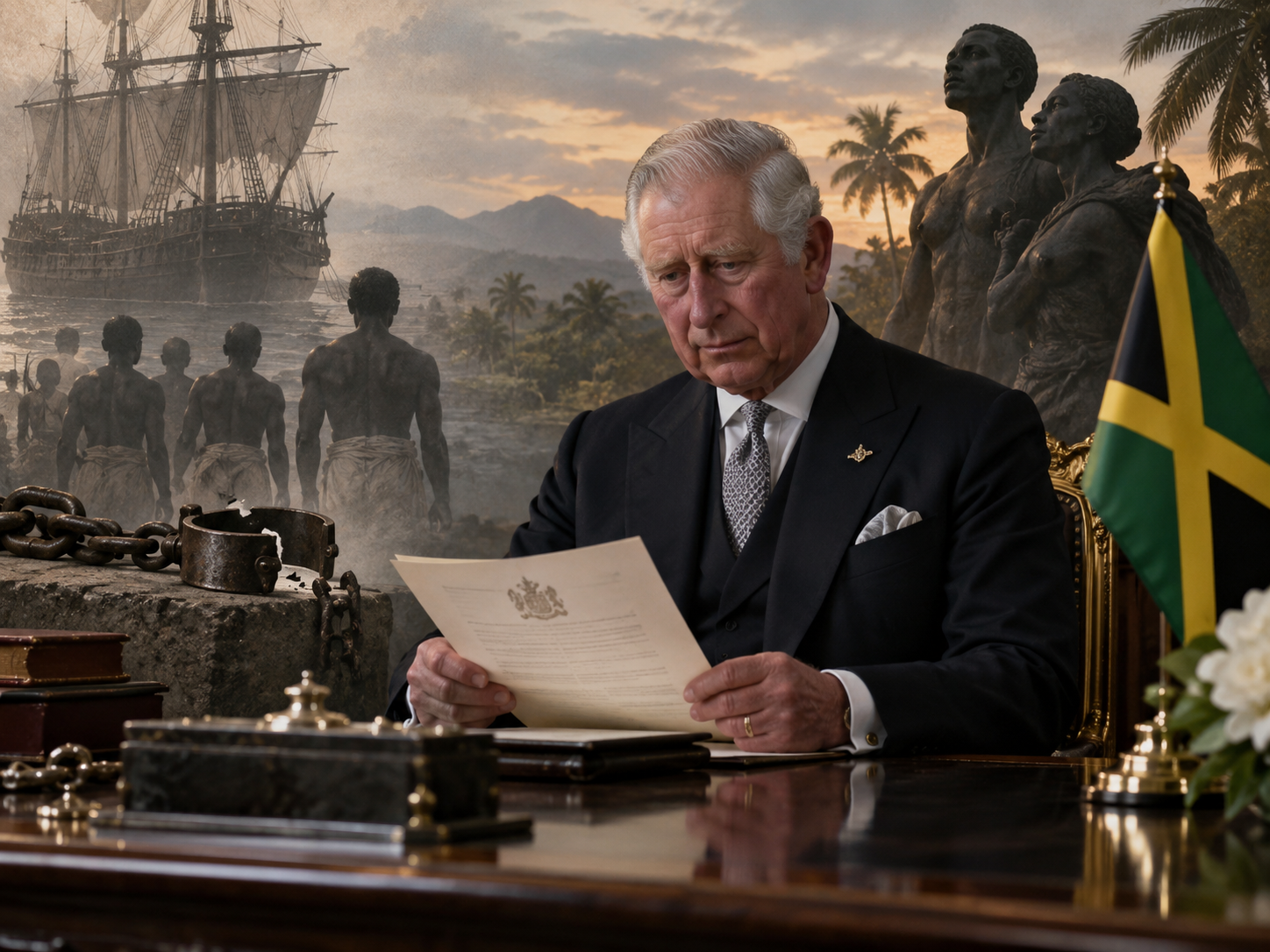
Jamaica has formally taken its long-running campaign for slavery reparations to a new legal level, submitting a petition addressed to King Charles III that seeks guidance on Britain's responsibility for centuries of African enslavement and whether reparations may be legally owed.
A Jamaican government delegation led by Minister of Culture, Gender, Entertainment and Sport Olivia Grange travelled to the United Kingdom as part of the initiative. The petition asks King Charles, who remains Jamaica's head of state, to refer three legal questions to the Judicial Committee of the Privy Council in London.
The legal questions reportedly focus on whether the enslavement of Africans in Jamaica was lawful under English law, whether the system violated international law, and whether Britain now has a legal obligation to provide some form of redress. Supporters describe the move as an unprecedented attempt by a Commonwealth country to push the reparations debate into a formal legal process rather than leaving it solely within political negotiations.
Centuries of Slavery and Colonial Rule
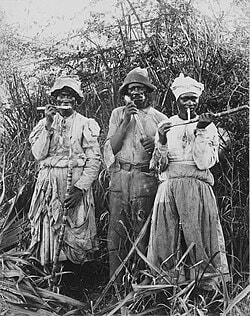
Jamaica was under British rule for more than 300 years, during which hundreds of thousands of enslaved Africans were transported to the island and forced to work, particularly on sugar plantations.
Slavery was abolished in the British Empire in the 19th century, but the compensation system that followed benefited slave owners rather than the people who had been enslaved.
One of the arguments raised by Jamaican officials and reparations advocates is that Britain compensated slaveholders following emancipation while generations of descendants of enslaved Africans received no comparable compensation for the exploitation and suffering inflicted on their ancestors.
The Jamaican government has previously estimated its reparations claim against Britain at approximately US$10 billion, although the broader CARICOM reparations campaign is not limited to direct cash payments.
The Significance of the Zong
The timing of Jamaica's campaign also carries historical significance.
September 6 marks the anniversary of the departure of the Zong slave ship from West Africa in 1781. The vessel was carrying hundreds of enslaved Africans toward Jamaica. During the voyage, scores of captives were deliberately thrown overboard as the ship's operators sought to claim insurance for the loss of what the legal system of the period treated as cargo.
The ship eventually arrived in Black River, St. Elizabeth.
Jamaica has erected a monument in Black River honouring the Africans who were killed during the Zong voyage, and Minister Grange has previously linked the anniversary directly to Jamaica's reparations campaign.
Britain Has Resisted Reparations
The United Kingdom has repeatedly resisted calls to pay reparations for slavery.
King Charles has publicly expressed sorrow over the history and legacy of slavery, but he has not endorsed financial reparations. The British government has also maintained opposition to paying compensation for historical slavery.
That makes Jamaica's latest approach particularly important. Rather than simply requesting that Britain negotiate compensation, Jamaica is seeking answers to fundamental legal questions about whether the system itself was lawful and whether a continuing responsibility for redress exists.
The petition is being made under a legal mechanism that allows the monarch to refer questions to the Judicial Committee of the Privy Council for consideration.
Not Everyone Supports the Strategy
The decision has also generated debate inside Jamaica.
Pan-African advocate Dr. Imani Tafari-Ama strongly criticised the decision to petition King Charles, arguing that Jamaica should not have to seek guidance from the British monarch on an injustice committed under British colonial rule.
She also pointed to the fact that the Caribbean Community, CARICOM, already has an established 10-point reparations plan designed to guide the region's campaign for reparatory justice.
The criticism highlights a larger question surrounding the movement: should Caribbean countries pursue reparations through British institutions, or should they continue to press Britain directly through political, diplomatic and international channels?
CARICOM's Wider Reparations Campaign
Jamaica's action is part of a much broader regional movement.
CARICOM countries have for years argued that European colonial powers should participate in a reparatory justice programme addressing the lasting consequences of slavery and colonialism.
The CARICOM plan goes beyond direct financial compensation. It has included proposals related to education, healthcare, cultural institutions, debt cancellation, development programmes and support for communities whose economic and social conditions were shaped by slavery and colonial exploitation.
Jamaica's legal petition therefore represents one route within a much larger Caribbean effort.
Could This Affect Jamaica Becoming a Republic?
The move also comes as Jamaica continues discussions about becoming a republic and replacing the British monarch as the country's head of state.
Jamaica became independent from Britain in 1962, but it retained the monarch under its constitutional system.
King Charles III is therefore simultaneously the person being petitioned over Britain's colonial legacy and Jamaica's current constitutional head of state.
A rejection of Jamaica's request would not automatically change the country's constitutional relationship with the monarchy, but the dispute could add further momentum to public discussions about whether an independent Jamaica should continue to have a British monarch as its head of state.
A Potentially Historic Legal Test
The immediate question is whether King Charles will refer Jamaica's questions to the Privy Council.
Even if the process does not ultimately result in financial compensation, it could force legal institutions to confront questions that governments have largely handled as political matters.
For Jamaica, the petition sends a clear message that the reparations campaign is no longer being pursued only through speeches, conferences and diplomacy.
The country is now attempting to place the question before a legal institution and ask directly: Was the enslavement of Africans lawful, and if it was not, what responsibility does Britain carry today for the consequences?
The answer — or Britain's refusal to provide one — could have implications far beyond Jamaica as other Caribbean nations continue their own campaigns for reparatory justice.
Source & attribution
Reporting by CanJam News. Information in this article is based on publicly available statements and verified reporting available at publication.
Topics

